Spring’s renewal brings sunshine, blossoms, and—most notably—rain. While the gentle showers are great for your garden, they can cause chaos for your outdoor essentials. Whether it’s gardening tools, cushions, pool accessories, or kids’ toys, keeping these items dry and organized is a seasonal challenge for many homeowners. The two leading storage solutions—deck boxes and sheds—each come with benefits and trade-offs. Understanding which is right for your space can save time, money, and frustration as the rainy season settles in.
The Hidden Impact of Spring Rain on Outdoor Spaces
Most homeowners underestimate how quickly water damage can occur when spring rain picks up. Soft patio cushions, gardening gloves, and small tools might withstand one drizzle, but repeated exposure to moisture can lead to mold, mildew, and rust. Even sturdy plastic or metal items can degrade faster with constant wet-dry cycles. That’s why choosing a secure, weather-resistant storage solution isn’t simply about tidiness—it’s an investment in long-term durability and functionality.
What Are Deck Boxes?
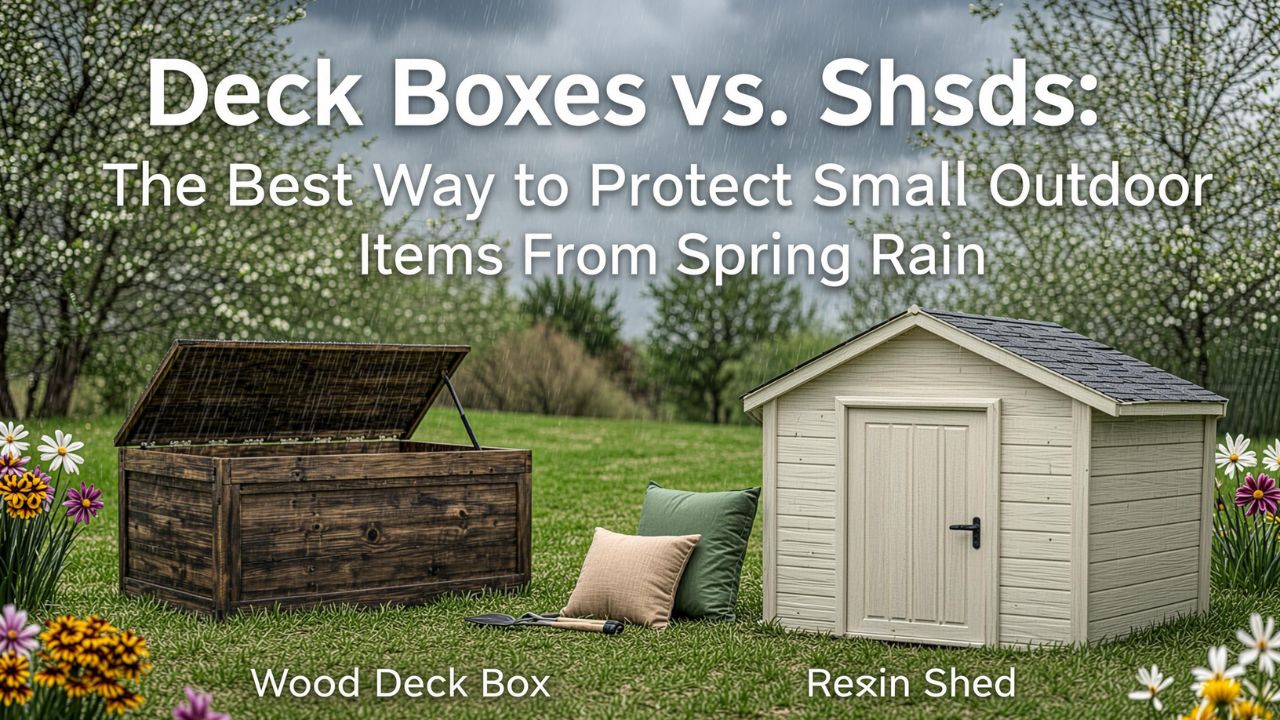
Deck boxes are compact, weatherproof storage containers typically made from resin, wood, or high-performance plastic. Available in a variety of sizes, they’re lightweight yet surprisingly spacious, making them ideal for smaller outdoor areas such as patios or townhome decks.
Benefits of Deck Boxes:
- Compact and portable. Designed to fit snugly against walls, on decks, or beside pool areas without consuming too much space.
- Weather-resistant design. Quality versions come with water-sealed lids that shield contents from rain and snow.
- Multi-purpose function. Some models double as benches, tables, or planters, maximizing outdoor functionality.
- Affordable and low-maintenance. They require minimal upkeep—wipe them down a few times a year.
For suburban backyards or small patios where every square foot counts, deck boxes offer a perfect balance of convenience and protection. For example, Keter’s durable outdoor deck box is popular because it combines longevity with sleek design, blending neatly into outdoor décor while shielding contents from the elements.
What Are Outdoor Sheds?
Sheds, on the other hand, are larger storage structures meant to house equipment, tools, and bulky seasonal gear. Often built from metal, resin, or wood, they provide a dedicated mini “garage” for extensive outdoor storage needs.
Benefits of Outdoor Sheds:
- Spacious capacity. Great for storing lawnmowers, bicycles, or gardening furniture.
- Weather insulation. High-end models come with reinforced roofing and waterproof floor panels to resist flooding or leaks.
- Organization options. Many include shelves, hooks, and racks to keep items sorted and visible.
- Increased property value. A sturdy, well-designed shed enhances your backyard’s functionality and can even add curb appeal.
However, these advantages come with some trade-offs. Outdoor sheds require more installation time, ground leveling, and, depending on your location, may need a permit. They also occupy significantly more space than is necessary for homeowners just looking to store smaller items.
Comparing Deck Boxes and Sheds: Which Is Right for You?
When choosing between a deck box and a shed, think beyond size alone. Consider your usage patterns, available outdoor space, and how often you’ll need to access stored items.
Space Efficiency:
Deck boxes excel in small or medium outdoor areas. They tuck easily under eaves or along walls. Sheds, while more spacious, demand a dedicated footprint—typically at least 6×8 feet—for installation.
Storage Capacity:
If you need to store only cushions, grill tools, or garden gloves, a deck box is sufficient. Homeowners with larger tools, sports equipment, or multiple seasons’ worth of gear will benefit from the extra room a shed provides.
Maintenance and Longevity:
Deck boxes are nearly maintenance-free. Many are made from UV-resistant materials that won’t fade or crack. Sheds require a bit more attention—especially wooden ones, which may need repainting or sealing to prevent rot.
Budget Considerations:
Deck boxes generally cost between $60 and $300, depending on size and material. A quality shed, by contrast, runs from $500 up to several thousand dollars when fully customized. For families looking to stay budget-conscious this spring, a deck box offers excellent protection without the hefty investment.
Design and Aesthetic Factors
Deck boxes have evolved from basic plastic containers into stylish outdoor assets. They come in faux wood finishes, rattan patterns, and contemporary neutrals that elegantly complement patios and decks. Sheds, while typically utilitarian, can also be enhanced with windows, trim, and matching paint to accentuate your home’s style.
If aesthetics matter—especially in smaller outdoor spaces—a deck box can blend in seamlessly without drawing attention. Sheds, due to their size, often stand out in the yard and should reflect your overall landscaping design.
Environmental and Practical Considerations
From a sustainability perspective, resin deck boxes tend to last many years and are fully recyclable at the end of their lifespan. Compact storage also reduces waste by encouraging homeowners to keep only what they truly need. Sheds, while offering long-term durability, require more building materials and space, which may not be ideal for those seeking an eco-friendly solution.
The Verdict: Practical Protection for Rainy Spring Days
Ultimately, the decision between a deck box and a shed depends on lifestyle and available space. vFor homeowners who value quick access, affordability, and minimal upkeep, a deck box offers efficient, moisture-resistant storage that withstands spring’s unpredictable rain. Those managing larger gardens or multiple outdoor tools may find a traditional shed more suitable for long-term organization.
So as the rain clouds roll in this spring, take a fresh look at your outdoor setup. A little preventive planning now not only keeps your essentials dry but also ensures your backyard stays beautiful, functional, and ready for sunny days ahead.