Creating an accessible bathroom doesn’t have to mean sacrificing style or comfort. Whether you’re accommodating aging family members, someone living with mobility challenges, or planning for the future, an accessible redesign ensures safety, independence, and peace of mind. Even simple upgrades can dramatically improve usability without requiring a complete remodel.
In this guide, you’ll learn five easy ways to make your bathroom more accessible, from slip-resistant flooring to smart storage solutions—all while keeping the design functional and beautiful.
Install Grab Bars for Safety and Stability
Grab bars are one of the simplest and most effective accessibility upgrades. They help users maintain balance, especially when transferring in and out of the shower or getting up from the toilet.
When choosing grab bars, prioritize models that support at least 250 pounds and comply with ADA (Americans with Disabilities Act) guidelines. Install horizontal bars near the toilet and shower, and consider adding an angled bar in the bathtub area for additional grip.
Modern grab bars come in sleek finishes like brushed nickel or matte black, allowing you to blend safety with style. You can even find options that double as towel racks to reduce clutter and maintain a clean farmhouse-inspired aesthetic.
Choose a Zero-Threshold or Walk-In Shower
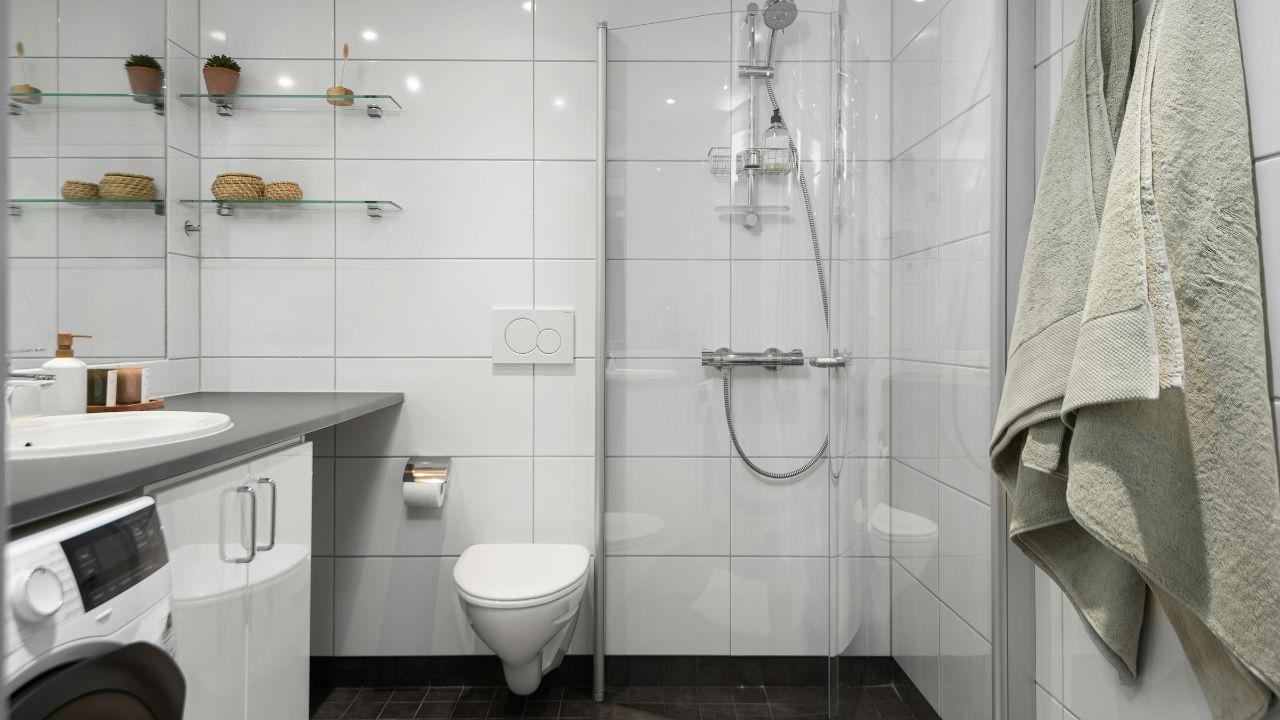
Traditional tubs and step-in showers can create serious tripping hazards for individuals with limited mobility or those who use walkers or wheelchairs. A zero-threshold or walk-in shower eliminates this risk by providing a level entry that’s flush with the floor.
Pair your shower with a handheld showerhead attached to an adjustable slider bar. This allows users to shower while sitting or standing, making daily routines more comfortable and independent. Adding a built-in bench or fold-down seat can also enhance both convenience and safety.
To keep water contained, install a frameless glass partition or a weighted shower curtain that’s easy to move. This design looks clean and modern and fits seamlessly with many decor styles, including rustic or farmhouse bathrooms.
Upgrade to Comfort-Height Fixtures
Standard toilets and sinks often require bending or crouching, which can be uncomfortable for people with mobility limitations. Comfort-height toilets, typically between 17 and 19 inches high, make sitting and standing easier while reducing strain on the knees and hips.
When updating your sink, consider a wall-mounted or floating vanity. These designs provide open space beneath for wheelchair access and visually lighten the room. Pair the vanity with lever-handle faucets that operate with minimal effort—no tight twisting required.
A well-designed vanity can also showcase personality. For instance, integrating a few rustic elements inspired by this farmhouse bathroom decor can balance practicality with charm, achieving a warm, inviting space that serves everyone’s needs.
Improve Lighting and Visibility
Good lighting is essential for both style and safety. Poor illumination can increase the risk of accidents, particularly around wet surfaces. Layer your lighting by combining ambient overhead lighting, task lighting around the mirror, and accent lighting to highlight design details.
Choose bright, evenly distributed light with a color temperature of about 3000–4000K, which mimics natural daylight. Motion-sensor night lights near the floor can help prevent nighttime falls.
For added convenience, consider installing voice-activated or smart lighting controls. With systems like Alexa or Google Home, users can adjust brightness or turn lights on and off hands-free—a key accessibility feature that’s also future-ready.
Modify the Bathtub for Easier Access
If your bathroom includes a bathtub, getting in and out safely can be a major concern. Fortunately, you don’t need to replace the entire tub. One practical solution is a tub cutout from Quick Tub, which converts a traditional bathtub into a walk-in model at a fraction of the cost and time.
This modification creates a low-step entry, reducing the barrier height by several inches and making bathing far safer for those with limited mobility. It’s a great alternative to a full bathroom remodel and can be done in a matter of hours.
For added comfort, install a non-slip mat inside the tub and attach a grab bar nearby. Together, these small changes create a safer and more accessible bathing experience that doesn’t compromise design.
Bonus Tip: Optimize Layout and Space
Beyond individual features, accessibility starts with good spatial design. Keep at least 30 inches of clear space in front of key fixtures, such as the toilet, sink, and shower, to allow easy wheelchair maneuvering. Arrange mirrors and shelves at varying heights so everyone can reach items comfortably.
If your bathroom is small, install open shelving or rolling carts for flexible storage. Mirrors and lighter wall colors can also make the space feel larger and more open while improving visibility.
Accessibility is not about medical-looking spaces—it’s about thoughtful design that works for everyone.
Making your bathroom disability-friendly doesn’t mean giving up on beautiful design. By focusing on accessibility upgrades like grab bars, walk-in showers, improved lighting, and adjustable fixtures, you can transform any bathroom into a space that’s safe, stylish, and inclusive.
With just a few smart changes, you’ll create a room where function meets comfort and design supports independence—proving that accessibility and elegance can coexist effortlessly.