Luxury kitchens are no longer just functional spaces—they are architectural statements. For interior designers working on high-end residential or hospitality projects, luxury German kitchens represent the gold standard of quality, innovation, and timeless design. Rooted in precision engineering and refined aesthetics, German kitchen design is admired worldwide for its ability to merge form and function seamlessly.
This article explores the key design features that define luxury German kitchens, offering practical insights to help interior designers make informed decisions when specifying premium kitchen solutions for discerning clients.
The Design Philosophy Behind German Luxury Kitchens
At the core of German kitchen design lies a commitment to precision, durability, and efficiency. German manufacturers approach kitchens as engineered systems rather than standalone furniture pieces. Every cabinet, joint, and surface is designed with long-term performance in mind.
For interior designers, this philosophy translates into predictable quality, consistent finishes, and design coherence across large-scale or bespoke projects. The emphasis is on restraint, balance, and purpose—qualities that resonate strongly with modern luxury interiors.
Minimalist Aesthetics with Architectural Clarity
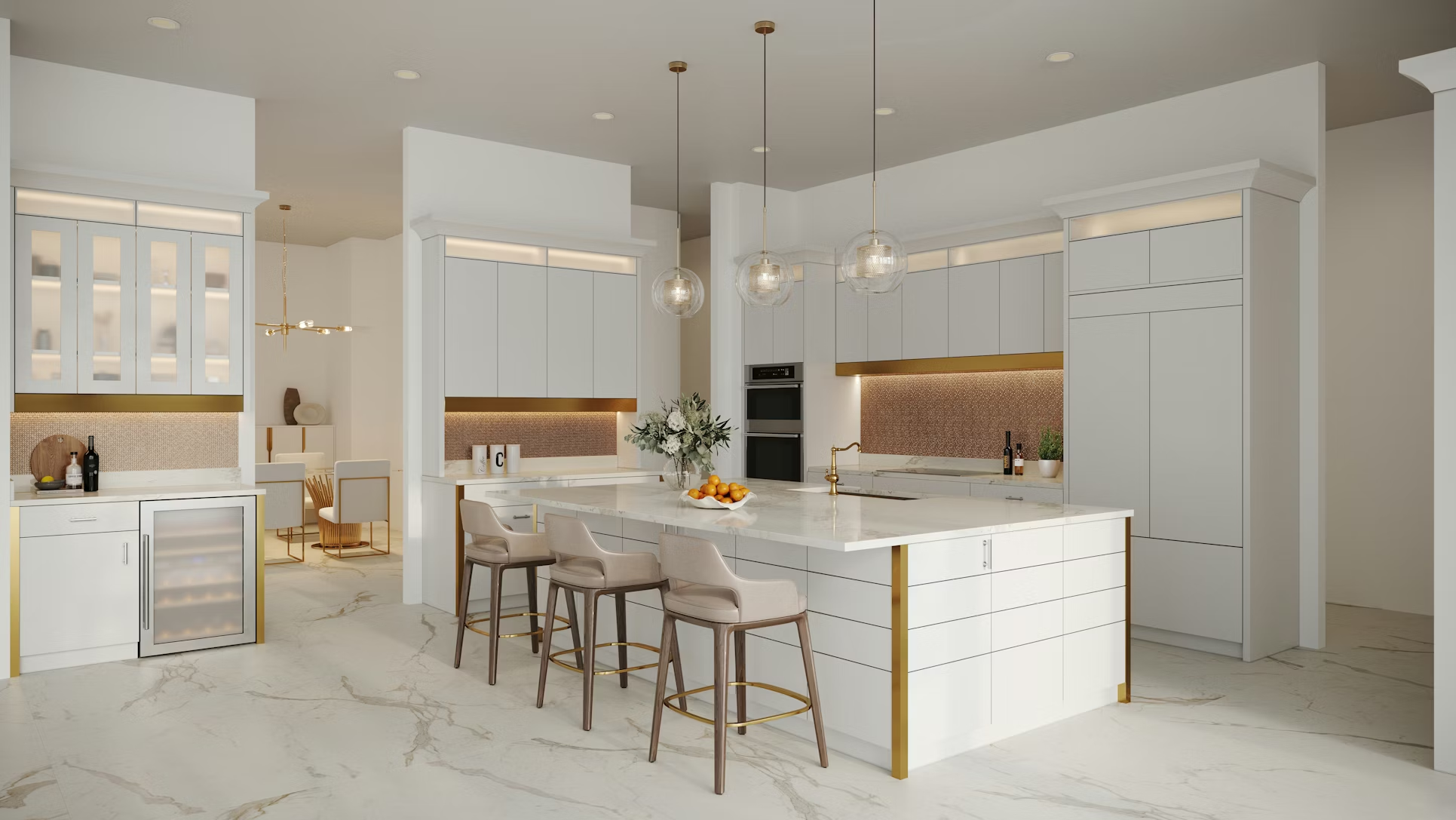
Luxury German kitchens are renowned for their clean lines and minimalist visual language. Ornamentation is intentionally avoided in favor of flat-panel cabinetry, handle-less designs, and seamless integrations.
Key aesthetic characteristics include:
- Flush cabinet fronts with precise alignment
- Integrated grip rails or push-to-open mechanisms
- Monochromatic or neutral color palettes
- Visual continuity between cabinetry, appliances, and wall panels
This understated elegance allows interior designers to integrate kitchens harmoniously into open-plan living spaces, especially in contemporary and modern-classic interiors.
Exceptional Craftsmanship and Precision Engineering
German manufacturing standards are among the strictest in the world, and this precision is evident in luxury kitchen construction. Cabinet carcasses are engineered for strength and dimensional stability, often using high-density boards and reinforced back panels.
Designers can expect:
- Millimeter-accurate cabinet systems
- Advanced soft-close hinges and drawer runners
- Long-lasting structural integrity
- Tight tolerances that ensure perfect installation
Such precision is especially valuable in large kitchens or custom layouts where alignment and proportion are critical to the overall design impact.
Innovative Materials and Premium Finishes
Material innovation is a defining feature of luxury German kitchens. Manufacturers continuously develop surfaces that are both visually refined and highly durable.
Commonly used materials include:
- High-gloss and super-matte lacquers
- Anti-fingerprint laminates
- Natural wood veneers with vertical grain matching
- Glass, ceramic, and metal-effect fronts
For interior designers, these finishes offer flexibility to meet diverse client preferences—from ultra-modern urban apartments to warm, contemporary villas—without compromising performance.
Highly Functional and Ergonomic Layouts
Functionality is not an afterthought in German kitchen design; it is foundational. Luxury German kitchens are designed around ergonomic principles that enhance daily use while maintaining a refined appearance.
Notable functional features include:
- Optimized work triangle planning
- Full-extension drawers with internal organization systems
- Integrated waste management and storage solutions
- Height-adjusted cabinetry for user comfort
These features allow designers to deliver kitchens that are not only visually striking but also intuitive and practical for end users.
Advanced Storage and Intelligent Organization
One of the most appreciated aspects of luxury German kitchens is intelligent storage design. Internal cabinet systems are meticulously planned to maximize usable space while keeping surfaces clutter-free.
Interior designers often specify:
- Modular drawer inserts for cutlery and cookware
- Pull-out pantry systems with full visibility
- Corner solutions that eliminate dead space
- Hidden appliance garages for small electronics
This level of organization supports the minimalist aesthetic while enhancing everyday functionality—a key selling point for luxury clients.
Seamless Appliance Integration
Luxury German kitchens excel at integrating appliances in a way that preserves visual harmony. Built-in ovens, refrigerators, dishwashers, and wine coolers are concealed behind matching cabinetry or aligned flush with cabinet fronts.
This seamless integration:
- Enhances the architectural quality of the kitchen
- Reduces visual clutter
- Supports open-plan living concepts
For interior designers, appliance integration is essential when creating cohesive interiors where the kitchen blends effortlessly with adjacent living spaces.
Sustainability and Long-Term Value
Sustainability is increasingly important in luxury residential design, and German kitchen manufacturers are leaders in this area. Many production processes prioritize environmentally responsible materials, low-emission finishes, and long product life cycles.
Benefits for designers and clients include:
- FSC-certified wood-based materials
- Durable finishes that reduce replacement cycles
- Energy-efficient manufacturing standards
Specifying sustainable luxury kitchens not only aligns with global design trends but also adds long-term value to projects.
Customization Within a Structured System
While German kitchens are highly engineered, they also offer extensive customization. Designers can tailor layouts, finishes, storage solutions, and configurations without sacrificing structural integrity.
This balance between systemization and flexibility makes luxury German kitchens ideal for:
- High-end residential projects
- Multi-unit developments
- Hospitality and serviced apartments
Interior designers gain creative freedom while maintaining control over quality and timelines.
Conclusion
Luxury German kitchens set the benchmark for modern kitchen design through precision engineering, refined aesthetics, and intelligent functionality. Interior designers offer a reliable foundation for delivering exceptional, high-end spaces that meet both visual and practical expectations.
OPPOLIA is a well-known cabinet manufacturer providing whole-house solutions, including custom cabinets, interior doors, wardrobes, bathroom vanities, aluminium windows, and furniture. If you are looking for a reliable project partner, OPPOLIA is the best choice.