
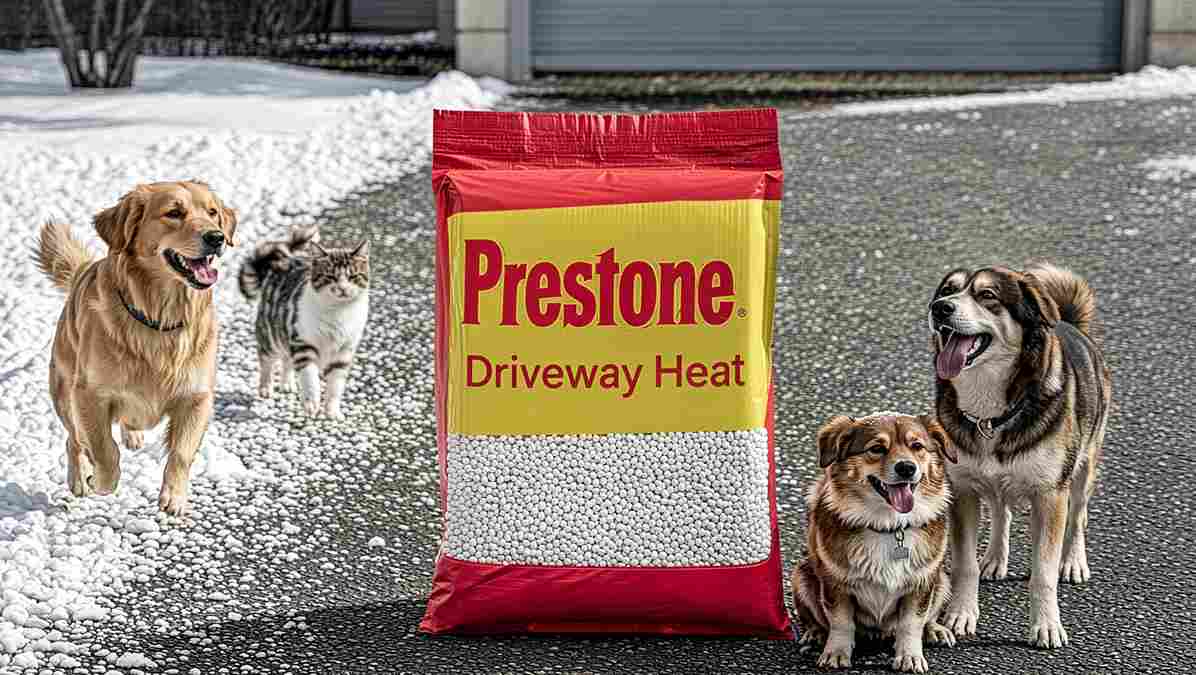
Winter is fun, but sometimes it brings surprises — and not the good kind. Even the most careful pet owners can face situations where their furry friends come into contact with ice melt like Prestone Driveway Heat. That’s why it’s so important to know what signs to watch for and what to do if your pet is affected. Today, we’ll go step by step in a clear, friendly, and practical way so you feel prepared.
By the end of this section, you’ll be able to answer the question: “Is Prestone Driveway Heat Safe for Pets?” in a real-world context, because you’ll understand how to protect your pets and react quickly if exposure happens.
How Pets Can Come Into Contact With Ice Melt
Before we look at symptoms, let’s understand how pets usually get exposed:
- Walking on Treated Surfaces
Dogs often run across the driveway or sidewalk, stepping on ice melt granules. This can irritate their paws immediately. - Licking Their Paws
After walking on treated areas, many pets lick their paws to clean them. This is the most common way Prestone Driveway Heat chemicals enter their system. - Accidental Ingestion
Some pets may sniff or eat granules directly from the ground. Smaller breeds or curious cats are particularly at risk. - Fur Contact
Ice melt can stick to fur, especially around the paws or belly. Pets may rub against furniture, floors, or even themselves, spreading chemicals further.
Knowing these exposure points helps you prevent problems before they start and explains why the question “is prestone driveway heat safe for pets to dogs” is so important.
Common Symptoms of Ice Melt Exposure
Pets can react differently depending on the amount of ice melt, size of the pet, and duration of contact. Here’s what to look for:
1. Paw Irritation
- Redness, swelling, or tiny cracks on pads
- Limping or avoiding walking
- Licking or chewing paws more than usual
Paw irritation is usually the first sign that something isn’t right. If your dog starts limping or pawing at their feet, it’s time to check their pads closely.
2. Gastrointestinal Issues
- Vomiting or dry heaving
- Diarrhea or loose stools
- Loss of appetite
These symptoms happen if your pet ingests Prestone Driveway Heat, which is why the phrase “is preston driveway heat safe for pets” matters. Even small amounts can cause mild discomfort, and larger amounts may require veterinary attention.
3. Drooling or Paw Licking
- Excessive drooling
- Constant licking of paws, fur, or mouth
- Trying to clean up chemicals by rubbing face on surfaces
This often occurs when pets taste residual chemicals on their paws or fur. It’s both a symptom and a potential route for ingestion, so prompt cleaning is critical.
4. Behavioral Changes
- Lethargy or unusual tiredness
- Hiding or avoiding areas they usually like
- Whining or vocalizing discomfort
Behavioral changes can be subtle, especially in cats or smaller, more stoic dogs. Watch for anything out of the ordinary during winter walks.
5. Eye or Skin Irritation
- Red or watery eyes
- Itching around paws or belly
- Rubbing face or body against walls or furniture
Ice melt dust can irritate sensitive areas, so check their fur, eyes, and exposed skin carefully after walks.
Immediate First Aid Steps for Pets Exposed to Ice Melt
Now that we know the symptoms, let’s cover practical, life-saving first aid steps:
Step 1: Remove Your Pet From the Treated Area
If your pet is on a driveway or sidewalk with Prestone Driveway Heat, pick them up if they are small or guide them away carefully. Prevent further exposure while you act quickly.
Step 2: Rinse Paws and Fur
- Use lukewarm water to rinse all affected areas.
- Pay attention to paws, between toes, and under nails.
- Avoid soap with harsh chemicals — a gentle pet shampoo is optional.
Rinsing prevents more chemicals from being ingested or absorbed through the skin.
Step 3: Wipe and Dry
- Gently towel dry paws and fur.
- Inspect paws for cracks, redness, or swelling.
- Avoid rubbing too hard, as irritation may worsen.
Step 4: Monitor for Symptoms
- Keep an eye out for vomiting, diarrhea, drooling, or lethargy.
- Check behavior over the next few hours — some reactions are delayed.
Step 5: Contact a Veterinarian if Needed
- If your pet shows persistent vomiting, diarrhea, limping, or lethargy, call your vet immediately.
- For small pets or large ingestion, this step is critical.
- Your vet may recommend hydration, observation, or medication.
Tips for Preventing Ice Melt Exposure in the First Place
Prevention is always better than emergency care. Here’s how to make winter safer:
- Wait for Ice Melt to Dissolve
Don’t let pets walk immediately on freshly treated driveways. Most ice melts, including Prestone Driveway Heat, need time to dissolve and reduce risk. - Use Pet Booties or Socks
Especially for small dogs, booties protect paws from chemical irritation and cold burns. - Create Safe Play Areas
Consider a pet-friendly path using sand or a pet-safe ice melt alternative. This way, your pet can explore without risk. - Clean Paws After Walks
Even if your pet seems fine, rinsing paws after winter walks is a good habit. This prevents licking exposure and protects indoor floors. - Store Ice Melt Safely
Keep bags sealed and out of reach. Curious pets might get into stored products and ingest chemicals accidentally.
Answering the Question: Is Prestone Driveway Heat Safe for Pets?
After all this, what’s the verdict? The answer is nuanced:
- Short-term, careful use: Yes, with proper precautions, the risk is low.
- Unsuspected exposure or over-application: No, there is a real risk of irritation and toxicity.
For small pets or those prone to licking, consider pet-safe alternatives. This ensures that winter fun remains safe and stress-free.
By following proper application, supervision, and first-aid practices, your furry friends can safely enjoy winter without facing the hazards of Prestone Driveway Heat.
Summary
- Pets are most commonly exposed through walking, licking, ingestion, and fur contact.
- Key symptoms include paw irritation, vomiting, drooling, behavioral changes, and eye irritation.
- Immediate first aid involves removing pets from exposure, rinsing paws and fur, monitoring symptoms, and contacting a vet if necessary.
- Preventive measures like waiting for ice melt to dissolve, using booties, creating safe zones, and cleaning paws can protect your pets.
- Responsible use of Prestone Driveway Heat answers the question “is prestone driveway heat safe for pets to dogs”, balancing effectiveness with pet safety.